
SEO Guide
What Is Local SEO and How Does It Work?
Local SEO ranks your business in the Map Pack and location-based searches. Proximity, relevance, and prominence explained for Malaysian businesses.
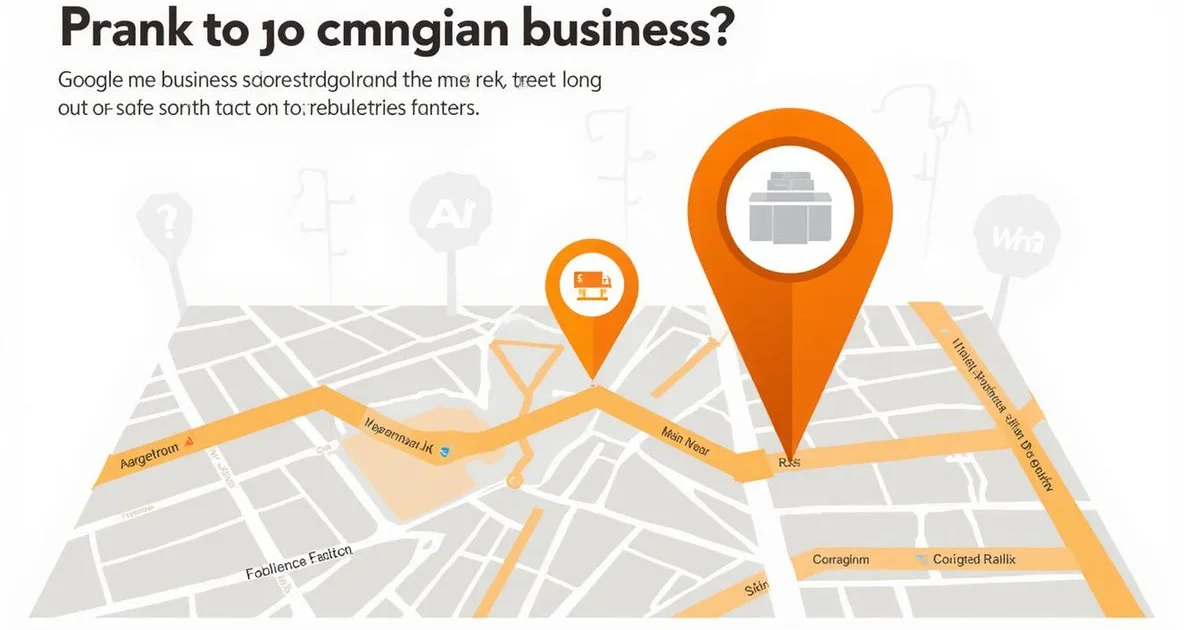
We often see businesses asking what is local seo after losing valuable foot traffic to competitors with better Google Maps listings. Almost 46% of all Google queries now carry local intent based on 2026 industry data.
These top three map listings dictate exactly where a customer decides to spend their money. Our agency, founded by SEO veteran Adam Yong in 2011, knows that ranking in the Map Pack is often worth more than position one in the standard organic results.
This guide explains the specific ranking factors Google uses to populate those local results. For a deeper look at execution, review our Local SEO hub.
What local SEO covers
We tackle this specific discipline using a distinct playbook because the signals differ completely from broad organic search. Each piece of the puzzle reinforces the others to build durable Map Pack rankings.
Google reports that a 100% complete profile makes a business 2.7 times more likely to be considered reputable. Our methodology breaks this down into several interconnected layers to ensure complete coverage.
- Consistent business mentions across Malaysian directories like Recommend.my and Malaysiakini Business Directory build immense trust.
- Name, Address, and Phone number (NAP) data must remain identical everywhere your business appears online.
- We also prioritize location-relevant website content, dedicated service area pages, and local schema markup to provide clear context.
- Earning and replying to real customer reviews at a steady cadence creates an active feedback loop.
- Links from regional sources like chambers of commerce and community sites act as powerful local endorsements.
Our audits frequently reveal that a perfect Google profile still underperforms if it lacks these supporting local citations. A clean on-site foundation is absolutely required to tie all these external signals together.
The compound effect across all these layers is what produces lasting search visibility.
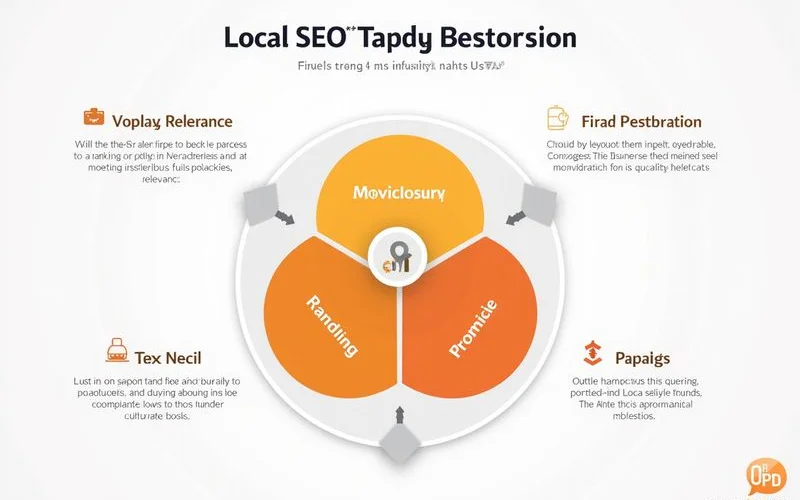
The three local ranking factors
We design strategies around the three primary factors Google uses to determine local placement. The 2026 Whitespark Local Search Ranking Factors report provides exact data on how these elements weigh against each other.
Proximity, relevance, and prominence all interact to produce the final Map Pack results.
Proximity to the Searcher
Our control over proximity is limited because Google decides what counts as “near” based on the user’s physical location. Coffee shop searches have very small radius windows.
Specialised B2B services cover much larger geographical areas by default.
Relevance to the Query
We focus heavily on relevance to prove exactly how well your business matches what the searcher needs. The latest Whitespark study shows that profile signals drive 32% of your total local ranking power.
A business set up with the correct primary and secondary categories ranks for far more queries than one with a vague setup.
Prominence and Authority
Our most effective lever is prominence, which measures how well-known and credible your business appears. Review signals and customer interactions now account for 20% of your ranking ability.
Perfect proximity with a weak reputation usually loses to a better-known competitor a few kilometres further away.
Map Pack vs organic results
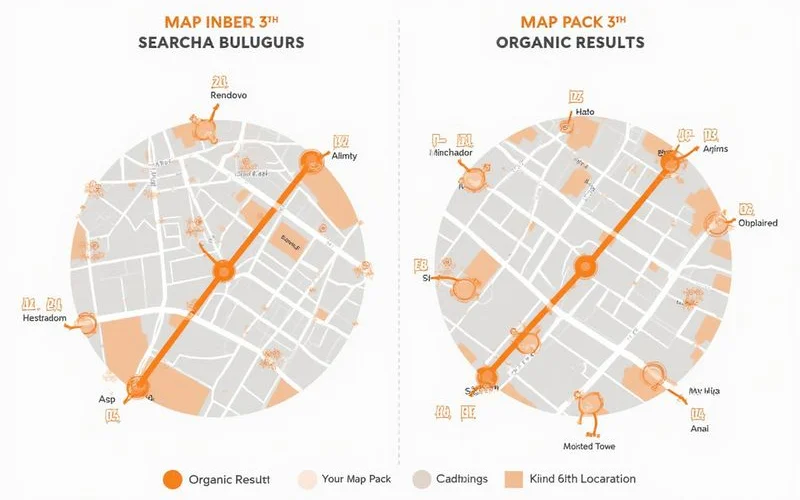
We frequently see businesses ranking top three in the Map Pack while sitting on page two organically. The Map Pack and the traditional organic results operate on completely different algorithms.
Map Pack ranking depends heavily on your profile setup, customer reviews, and local citations.
Our traditional organic strategies rely much more on long-form content quality and technical site health. Recent First Page Sage data shows that the number one position in the Map Pack secures about 17.6% of clicks.
Standard organic position one can grab up to 39.8%, but that drops sharply if a Map Pack pushes it down the page.
We use the breakdown below to show clients exactly how the two search features compare in 2026. This side-by-side view clarifies the different ranking requirements.
The click-through rates clearly favor whichever feature appears highest on the screen.
| Feature | Primary Ranking Signals | Average #1 CTR (2026) | Visual Presentation |
|---|---|---|---|
| Google Map Pack | Profile Setup (32%), Reviews (20%) | ~17.6% | Map layout, star ratings, business info |
| Standard Organic | Content Quality, Backlinks, Technical | ~39.8% (drops if Map is present) | Standard blue link, meta description |
When local SEO matters most
Our highest return on investment comes from applying these tactics to location-dependent business models. The heavy traffic congestion in areas like the Klang Valley makes local seo malaysia strategies incredibly relevant for nearby consumers.
Recent Think with Google statistics show that 28% of local searches result in an offline purchase within 24 hours.
We strongly advise targeting these specific business categories for optimal results:
- Service-area businesses like plumbers, electricians, and contractors see massive lead generation from local maps.
- Physical retail shops, restaurants, and medical clinics rely on this visibility for daily foot traffic.
- We require multi-location franchises to maintain individual profiles to capture distinct regional catchments.
- Traditional search and digital PR work much harder for ecommerce brands without physical stores.
It is a lower priority for purely online businesses targeting national audiences.
How it connects to the rest of your SEO
Our team never treats regional optimization and broad website authority as separate workstreams.
- A strong regional presence directly improves your overall site trust and authority scores.
- Clean technical performance and helpful content simultaneously boost your Map Pack rankings.
We combine these overlapping signals on the exact same website foundation to maximize results. If your revenue depends on nearby customers, dominating the local results is the best starting point.
The Map Pack remains the most valuable real estate in modern discovery.
Our discovery audit provides a realistic plan for your specific categories, citations, and review targets. This comprehensive review gives you a clear roadmap before any retainer commitment.
Reach out today to see exactly how these local seo tactics apply to your business.