
SEO Guide
How to Rank in the Google Map Pack
The signals that actually move Map Pack rankings: proximity, GBP, reviews, citations, and on-page local SEO.
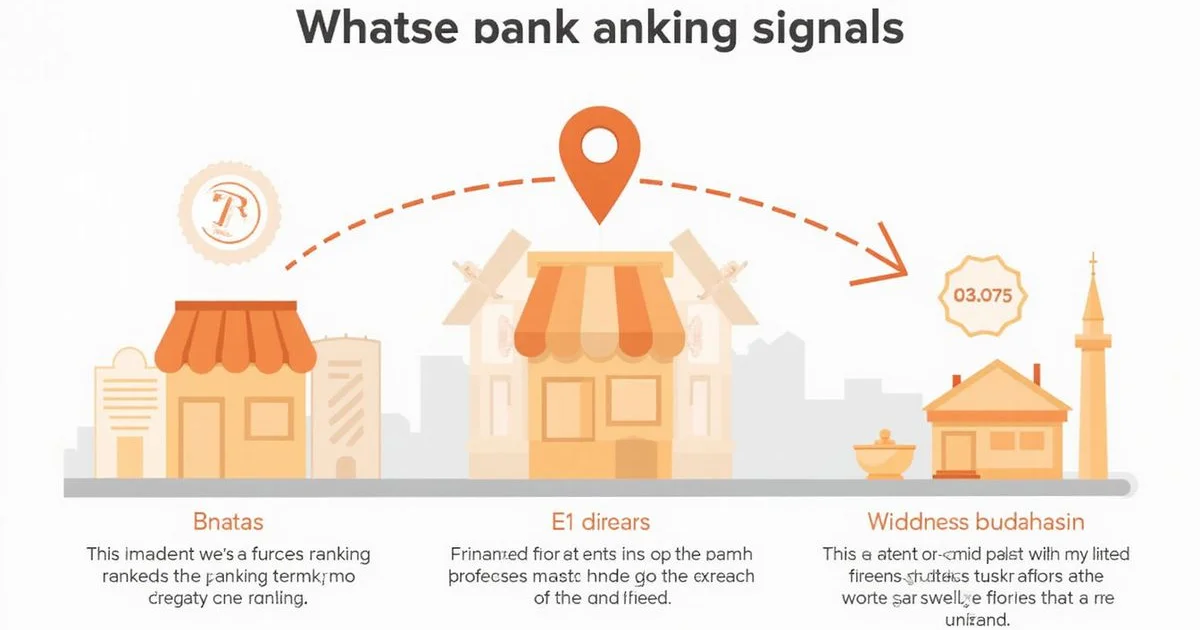
You already know how frustrating it is to watch a competitor capture local foot traffic simply because they appear higher on Google Maps. We see this scenario constantly affecting Malaysian businesses and retail stores.
Recent 2026 data from Rallio shows that the number one position inside this map section commands a massive 17.6% average click-through rate.
Figuring out how to rank in Google Map Pack results is the most critical step for local visibility. Our internal data confirms that the three businesses shown there capture the overwhelming majority of clicks and calls for location-intent queries.
Ranking in position one for regular organic results below the map is worth a fraction of any of those three slots.
This massive difference is the reason a strong Google 3-pack ranking is a bigger deal than it seems, and it sits at the heart of our Local SEO work. We will look at the exact signals that actually move the algorithm, and then outline a practical timeline for the work.
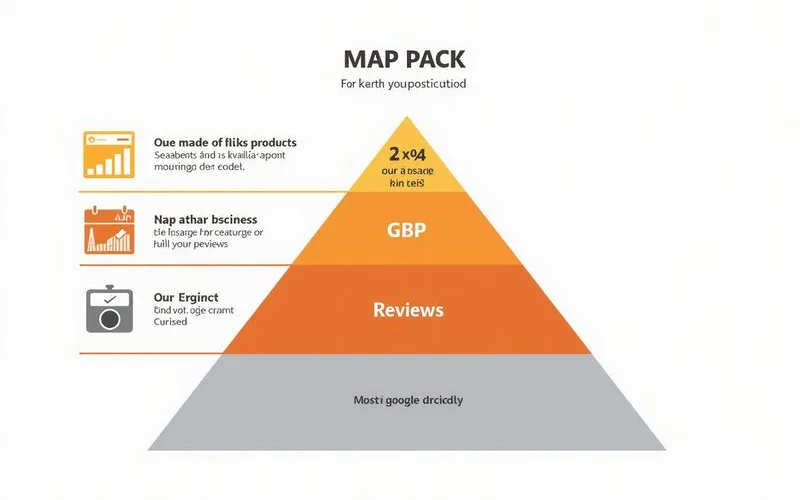
How to Rank in Google Map Pack: The Ranking Signals in Priority Order
Industry leaders extensively study Google’s local ranking algorithm. We rely on this continuous research to understand exactly what moves the needle for local visibility. The signals that consistently move Map Pack rankings can be grouped into three distinct categories.
Foundation and Profile Signals
Your Google Business Profile completeness and accuracy act as the absolute baseline for visibility. A filled-in primary category is the single most important ranking factor, according to Whitespark’s 2025 Local Search Ranking Factors report. Accurate secondary categories, a complete business description, listed services, geo-tagged photos, and updated hours are all foundational.
We notice that without this accurate base, no other optimisation tactic compensates for the missing data. The on-page layer on your website heavily reinforces these profile signals. Location-relevant content, properly structured location pages, and internal linking from related content build a strong relevance footprint.
We strongly advise installing LocalBusiness schema markup using a dedicated tool like RankMath Pro. This simple code snippet explicitly feeds your operational details directly to the search engine crawlers.
Reputation and Review Signals
Review volume and velocity directly dictate your prominence in the local market. Total review count, recent review activity, and your average star rating must outpace your competitors. Map Pack winners almost always have significantly more reviews than businesses stuck on page two.
We see that stagnant review profiles signal an inactive business to the algorithm. A recent 2026 industry report highlights that review recency is now a top-five ranking factor, meaning fresh reviews hold more weight than older ones. The actual review content also acts as a massive keyword signal.
When customers mention the specific service you want to rank for, Google reads this as semantic confirmation of your relevance. A review stating “we got fast aircon repair” is infinitely more valuable than a generic five-star rating.
Off-Page and Location Signals
Name, address, and phone number consistency across citations is vital for building algorithm confidence. Your NAP data must remain identical across major directories, because inconsistency actively suppresses your ranking potential. In Malaysia, getting listed on authoritative platforms like Mudah.my, Yellow Pages Malaysia, and Streetdirectory carries real local weight.
We outline the complete audit and fix process in our NAP consistency guide. Inbound links from local sources further establish your regional authority. Links from regional press, local chambers of commerce, and community sites provide a trust signal that generic backlinks simply lack.
Proximity to the searcher is the one factor you cannot fully control. A stronger overall prominence signal can extend your effective ranking radius significantly beyond your physical doorstep.
The sequence that actually works
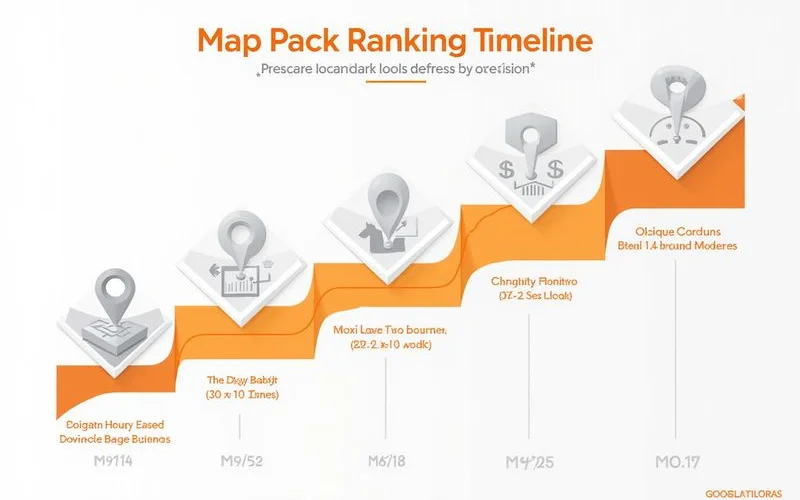
Many businesses try to execute every tactic at once and inevitably run out of energy by month four. We recommend sequencing the work in a specific order that produces the fastest financial payback. A phased approach ensures your local seo map pack efforts build momentum sustainably over a full year.
Here is the exact implementation timeline we use for local campaigns:
- Months 1-2 (Fix the Foundations): You must audit and complete every section of the Google Business Profile. We suggest using specialised auditing software like BrightLocal or Whitespark to quickly identify and fix NAP inconsistencies across your top 20 local citation sources. This initial phase also requires installing LocalBusiness schema on your site and configuring an automated review-generation system.
- Months 3-4 (Start the Review Engine): You need to push hard on systematic review requests. Earning two to four new reviews per week is a highly effective cadence for most Malaysian businesses. We consistently notice that sending SMS review requests generates a 10% to 15% higher completion rate compared to standard email follow-ups. This specific two-month window is where the first real ranking movement appears.
- Months 5-6 (Build Local Authority): The focus shifts entirely to off-page signals. You should earn links from regional press, sponsor a local cause, join industry groups, and publish highly specific location pages. These localised link signals heavily reinforce the foundational Map Pack work.
- Months 7-12 (Defend and Scale): Maintaining a steady review velocity is mandatory to prove ongoing business activity to the algorithm. We advise refreshing your GBP content with new geo-tagged photos and posts on a monthly basis. You should also expand your targeting into additional service categories where relevant, while closely monitoring your competitors.
What does not work
Certain tactics look like legitimate Map Pack optimisation but actually damage your search visibility. We actively warn clients to avoid these outdated strategies entirely. Here are the most common pitfalls that trigger algorithmic penalties.
The Dangers of Fake Signals
Automated systems quickly detect and delete fake reviews, often resulting in severe manual penalty consequences. The risk-reward ratio for buying reviews is terrible and can permanently burn a domain’s trust score.
We constantly see businesses trying to buy bulk citations from spammy providers on platforms like Fiverr. These massive packages of low-quality directories add useless noise without providing any ranking benefit. They can even trigger algorithmic filtering that actively suppresses the value of your legitimate, high-quality citations.
Severe Guideline Violations
Keyword stuffing your business name is a massive risk in today’s search landscape. Adding promotional phrases like “Best Cheap Aircon Repair Kuala Lumpur” to your real business name is a direct violation of Google’s guidelines.
We find that Google’s 2026 spam detection updates now issue immediate hard suspensions for this tactic. A hard suspension completely removes your listing from public view until you pass a strict video verification appeal. You must use your actual, registered legal business name only.
Creating multiple GBP listings for a single physical business location is another common mistake. The search system inevitably filters or merges duplicate listings, often defaulting to the version you did not optimise. One authentic, highly managed listing will always outperform five abandoned duplicate profiles.
Proximity strategy for service-area businesses
If you run a service-area business (SAB) like a mobile mechanic, plumber, or on-site consultant, your Map Pack proximity operates under completely different rules. Google evaluates your relevance based on your declared service area rather than a specific public storefront address. We implement a few critical adjustments to maximise visibility for these mobile businesses.
Here are the key optimisation steps for service-area profiles:
- Configure the profile correctly: You must set up the GBP strictly as a service-area business and hide your physical address.
- Set realistic boundaries: Define your service area to cover the specific cities or postcodes you actually serve. Recent 2026 industry data from Arc4 indicates SABs can effectively rank within a 5 to 25-mile radius depending on local competition density.
- Align your off-page signals: Build local citations and website backlinks that specifically mention your target service areas.
- Generate location-specific feedback: Earn customer reviews that explicitly mention the specific neighbourhoods or sub-cities where you performed the work.
We use geo-grid tracking tools like LocalFalcon to measure ranking performance across these larger geographic windows. Done correctly, an optimised SAB profile can dominate the Map Pack across a much wider territory than a traditional static storefront.
How long until you rank
Business owners constantly ask for an exact timeline for achieving first-page visibility. We always provide realistic expectations based on historical campaign data, rather than promising impossible overnight results. For most Malaysian SMEs starting from a partially-optimised baseline, the journey follows a predictable pattern.
Here is the standard timeline you should expect for consistent local growth:
| Timeline phase | Expected ranking milestone |
|---|---|
| Within 60 days | Visible movement on less competitive, long-tail Map Pack queries. |
| Month 4 to 6 | Breaking into the top three rankings for secondary service keywords. |
| Month 6 to 9 | Achieving top three Map Pack positions for highly competitive, primary commercial keywords. |
| Month 12 and beyond | Sustained position one or two on the majority of relevant local queries. |
We warn clients to be extremely skeptical of agencies promising faster timelines. Achieving top spots in just a few weeks usually involves risky black-hat tactics, like using click-through rate (CTR) manipulation bots. These borrowed gains always collapse once Google updates its algorithm.
Conversely, progress that is significantly slower than this timeline usually points to deep foundational issues. We find that a comprehensive diagnostic audit will quickly identify the specific technical roadblock holding the site back.
Where to start if you are stuck
If you have executed the basic optimisation steps and the algorithm still ignores your business, a specific technical bottleneck is likely holding you back. We typically find that the binding constraint is usually an incorrect primary GBP category, a serious NAP inconsistency, or a thin review profile.
A recent 2026 survey by BrightLocal confirmed that an inaccurate primary category is the number one silent killer of local visibility across all industries.
A professional diagnostic audit quickly identifies which specific factor is failing. The resulting technical fix is usually straightforward once the issue is isolated.
Our Local SEO engagements always include a comprehensive Map Pack diagnostic during the initial discovery phase. This initial review pinpoints exactly which local signal is restricting your growth and provides a concrete action plan to resolve it.
If you are ready to stop guessing how to rank in Google Map Pack results, reach out to our team today to schedule your diagnostic review.