
SEO Guide
Local Citations and NAP Consistency Explained
What NAP consistency means, why it affects local rankings in Malaysia, and how to clean up local citations across directories.

We often see local search results fluctuate wildly for businesses with messy data profiles.
A 2026 industry report found that 73% of local queries now trigger AI responses. This shift makes exact data matching, specifically nap consistency local citations, more critical than ever.
Founded in 2011 by SEO veteran Adam Yong, Adam SEO operates on the premise that search engine rankings alone are meaningless without tangible business results.
That focus is exactly why directory audits remain a core part of the process. Let us look at the actual data, what it tells us, and explore a few practical ways to clean up your local footprint.
Why Google cares about NAP consistency
Google cross-references the information in your Google Business Profile against what other external sources say about you. The algorithm uses this consistency to verify your business is legitimate and active.
A 2026 industry survey revealed that while 92% of businesses optimise their profiles, only 70% actively manage their citation data. That discrepancy creates a major vulnerability for local brick-and-mortar businesses. If twenty trusted directories list your business at “Level 23, Premier Suites, Mont Kiara” with the phone number “+60 16-699 9393”, Google has high confidence in that data.
We see the opposite effect when directories show a scattered history of your business details. The algorithm reads this inconsistency as a duplicate listing problem. This confusion directly suppresses your visibility in local search results.
Specific data variations that trigger ranking suppression include:
- Outdated phone numbers from a previous office space
- Missing unit numbers or incomplete suite details
- Unofficial name variations from past rebrands
- Conflicting operational hours across regional directories
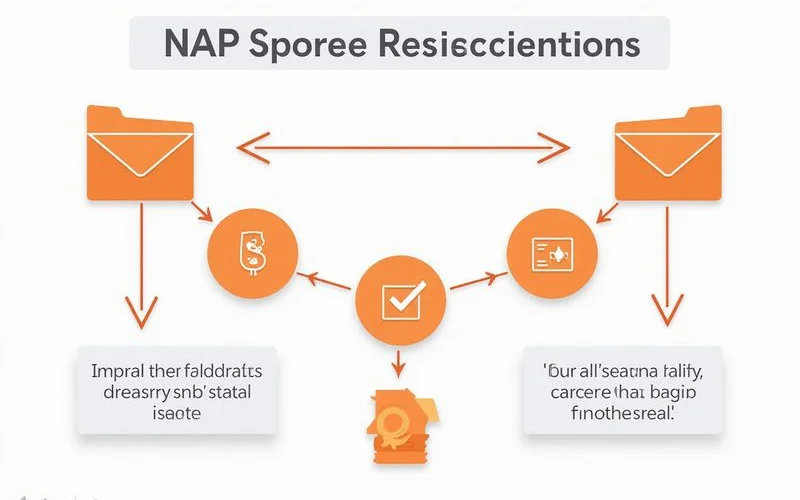
Inconsistent business details are the fastest way to confuse search engines and lose your spot in regional search results.
What counts as a citation
Anywhere your business NAP appears online is technically a citation. These mentions fall into two distinct categories: structured directory listings and unstructured web mentions.
Structured citations are official listings in business directories where your details appear in a dedicated format. Good examples in Malaysia include Bing Places for Business, Apple Maps, Yelp, and Yellow Pages Malaysia. Social platforms like a Facebook Page or LinkedIn Company profile also provide structured data formats.
Unstructured citations happen naturally within articles, news pieces, or blog posts. A local news mention detailing your address and phone number acts as an unstructured citation. Social media posts from customers listing your business details count for prominence too.
Our team recommends focusing on structured formats first because they are much easier to audit and correct. Unstructured mentions often require reaching out to journalists or bloggers directly. Tools like Frizerly, updated for 2026, can scan for both types across the web.
| Feature | Structured Citations | Unstructured Citations |
|---|---|---|
| Format | Dedicated business listing | Natural text integration |
| Examples | Yellow Pages, Apple Maps | News articles, blog reviews |
| Control Level | High (Directly editable) | Low (Requires outreach) |
| Primary Benefit | Core local ranking signal | Organic PR and prominence |
What “consistent” actually means
Consistency means your business details match exactly character for character across every platform. Search algorithms read slight variations as entirely different locations.
For example, the algorithm treats “Suite 23, Level 3” and “Unit 23, Level 3” as separate entities. The same applies to common Malaysian street abbreviations like “Jalan Kiara 1” versus “Jln. Kiara 1”.
Phone number formatting causes similar issues. Listing “60166999393” on one site and “+60-16-699-9393” on another forces the system to guess which one is correct. If you still have “012-345 6789” floating around from an old office, you are splitting your local authority.
We define one canonical format for each piece of information. You must pick this single version and apply it rigorously to every online mention.
The strict canonical standard should include:
- A single business name format matching your official Google Business Profile
- One address layout using full words instead of abbreviations
- A uniform phone number structure using the international country code format
Where to look in Malaysia
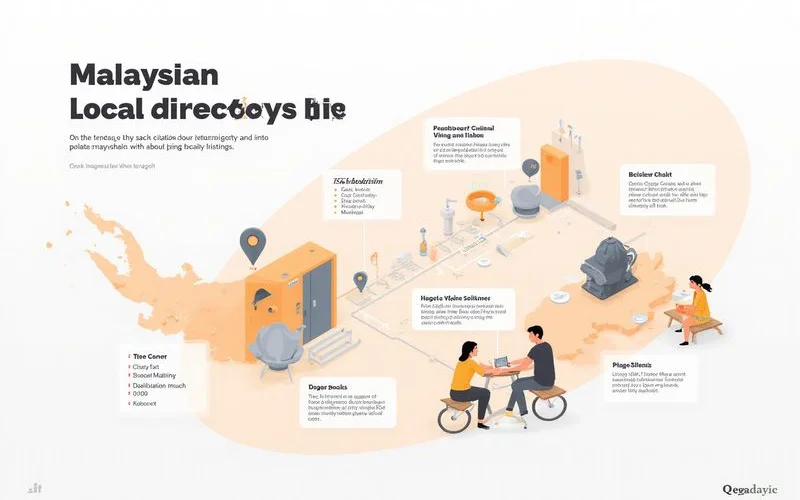
The most impactful local directory listings in Malaysia combine global search platforms with regional business indexes. You should target platforms that align with actual local search behaviour.
We prioritize high-impact directories that actively drive traffic and validate entity data. Skipping generic foreign directories is a smart move because they add noise without providing any ranking benefit.
A 2026 review of regional indexing shows that maintaining active profiles on niche Malaysian sites carries more weight than bulk submissions to obscure global lists. Focus your efforts on the platforms that local consumers actually use.
Essential citation targets for Malaysian businesses include:
- Google Business Profile: The mandatory foundation for all local visibility.
- Bing Places & Apple Maps: Crucial for users outside the Google ecosystem.
- Yellow Pages Malaysia (yellowpages.my): A highly trusted regional data source.
- Local Niche Directories: Platforms like CariGold, BusinessList.my, FoodAdvisor for F&B, or RemoteRehab for healthcare.
- Social Profiles: Facebook, LinkedIn, and Foursquare.
Submitting your business to low-quality foreign directories provides zero SEO value and can even trigger spam filters in 2026. Stick to relevant, verified regional platforms.
The audit-and-fix process
The cleanup process requires generating a comprehensive audit report and methodically correcting every inaccurate data point. This workflow secures your foundation and prevents long-term ranking decay.
For most local brick-and-mortar businesses, the initial cleanup takes roughly 8 to 15 hours of focused effort. After that, maintaining your nap citations requires only one or two hours every quarter.
Discovery and Standardization
We start by identifying exactly where your business data lives online. You cannot fix inconsistencies until you have a complete map of your digital footprint.
- Run a diagnostic scan: Use dedicated 2026 auditing tools like BrightLocal, Whitespark, or Moz Local to crawl major directories.
- Compile the variance report: Document every single incorrect spelling, wrong address, or bad phone number actively published online.
- Define the canonical master: Select the exact data format that mirrors your active Google Business Profile perfectly.
- Take ownership of listings: Proceed through the verification steps to claim any existing profiles you do not currently control.
Correction and Maintenance
Once you control the listings and know what needs fixing, the manual update phase begins. This step requires patience, as some directories take weeks to publish user-submitted corrections.
- Submit targeted updates: Push your canonical data format to replace the inaccurate information on every claimed listing.
- Eradicate duplicate entries: Request the removal of redundant listings caused by old office moves, as these split your authority.
- Execute citation building malaysia campaigns: Register your business on high-value regional directories where you are currently missing.
- Establish a quarterly audit: Schedule a routine check every three months to catch new errors before they impact your rankings.
The connection to Map Pack ranking
Clean data consistency removes a significant algorithmic drag that suppresses your visibility in local search. It is a foundational requirement rather than a magical shortcut to the top spot.
Whitespark’s 2026 Local Search Ranking Factors report confirms that precise citation signals remain a core driver for Map Pack success. The most substantial improvements happen for companies that recently relocated and left conflicting addresses scattered across the internet.
We include continuous citation building in every Local SEO retainer we offer. This methodical background work compounds quietly month after month.
Done properly, auditing your directories is one of the highest-ROI investments you can make for regional visibility. The process is boring, methodical, and highly durable.
Start your audit today by running a free scan on Moz Local or BrightLocal to see exactly where your data stands.
| Action | Immediate Impact | Long-Term Benefit |
|---|---|---|
| Fixing NAP Errors | Removes ranking suppression | Builds trust with search algorithms |
| Removing Duplicates | Consolidates local authority | Prevents customer confusion |
| Quarterly Audits | Catches new data scraping errors | Maintains consistent Map Pack presence |