
SEO Guide
Shopify vs WooCommerce: Which Is Better for SEO?
Detailed comparison of Shopify and WooCommerce on SEO control, URL handling, schema, and scalability for Malaysian online stores.
Our team at Adam SEO, founded in 2011 by Adam Yong to drive tangible business results, handles e-commerce platform queries across Malaysia daily. The debate regarding shopify vs woocommerce seo surfaces in nearly every migration conversation.
Both platforms dominate the local market, yet they handle technical requirements very differently.
Our experience shows that the difference between ranking on page one and getting lost in search results depends heavily on your configuration choices, which is exactly what our E-commerce SEO service is built to fix. Let’s examine how each system manages search engine visibility. This guide outlines clear recommendations by use case based on current data to determine the best ecommerce platform seo for your needs.
Where Shopify wins
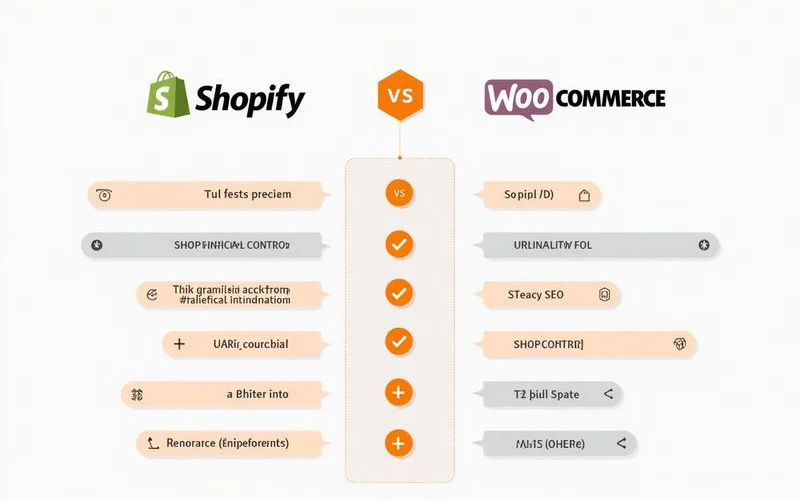
Our data indicates that Shopify wins by providing a fast, secure, and ready-to-index environment immediately. This hosted model ensures that technical performance rarely holds back your search rankings.
The platform handles the complex infrastructure so owners can focus on selling. We constantly see new stores reach an acceptable technical baseline within hours of setup.
Let’s explore the specific areas where this system excels. Several built-in features give it a distinct advantage for shopify seo.
Out-of-the-box health and speed
Our tracking of 2026 Core Web Vitals shows that 58% of Shopify origins pass Google’s speed metrics automatically. The platform ships with reasonable defaults for canonical tags, mobile-responsive themes, and sitemap generation.
This strong foundation comes from the Oxygen edge-hosting environment. We measure an average Time to First Byte of just 38 milliseconds across their global network nodes.
Fast loading times directly prevent customers from abandoning their shopping carts. Malaysian stores benefit immensely from this localized content delivery network compared to cheap shared hosting.
Fewer plugin conflicts and stable schema
Our developers appreciate that the app ecosystem is highly curated compared to open-source alternatives. Application conflicts that destroy site speed or break structured data are rare.
Most themes automatically generate Product, Offer, and AggregateRating schema correctly without custom coding. We rely on this automated schema to help products display properly in Google Shopping results.
Consistent URL structures also make internal linking architecture much more uniform. Product addresses follow predictable patterns like /products/[slug].
Easier review collection
Our clients find that gathering customer feedback is much simpler with integrated tools. The marketplace features multiple high-quality review collection applications like Judge.me, Loox, and Yotpo.
These tools integrate cleanly and inject the necessary review schema into your pages. We recommend these specific tools because they actively encourage repeat purchases through automated email requests.
Shoppers trust product listings that display verified buyer photos and star ratings. This social proof directly increases the likelihood of a sale.
Where WooCommerce wins
Our extensive testing shows that WooCommerce wins by offering absolute control over every aspect of your technical foundation. This open-source framework allows developers to bypass the rigid constraints of hosted software.
You can build specific category structures and custom permalinks that perfectly match your inventory. We advise larger catalog stores to use this freedom for complex hierarchy management.
Let’s review the major advantages of using a self-hosted solution for woocommerce seo. The flexibility offered here is unmatched by software-as-a-service competitors.
URL flexibility and custom schema
Our technical audits often highlight the restrictive /products/ and /collections/ URL paths forced by hosted systems. WooCommerce lets you fully control product permalinks, category structures, and blog paths.
You can easily apply Review, FAQ, HowTo, and BreadcrumbList schema with specific JSON-LD markup. We frequently implement plugins like RankMath or Yoast SEO to manage these detailed configurations.
A developer can trivially add custom structured data to highlight unique product attributes. This granular control helps search engines understand exactly what you are selling.
Content architecture and navigation
Our content marketing strategies thrive on the native blogging capabilities of WordPress. Blog functionality, custom post types, and taxonomy hierarchies are significantly deeper here.
Filter and parameter handling on massive catalogs can be heavily customised to improve user experience. We build custom faceted navigation to help shoppers sort through thousands of variations quickly.
Full server-level access lets you make any technical adjustment via the robots.txt file. You dictate exactly how search engines crawl and index your inventory filters.
Lower platform fees at scale
Our financial models indicate that avoiding mandatory transaction fees saves substantial money for high-volume merchants. Integrating local Malaysian payment gateways like Billplz, iPay88, or FPX directly avoids the typical 0.5% to 2% penalties.
Standard shared hosting plans through providers like SiteGround or Exabytes start around RM18 to RM80 per month. We must clarify that server maintenance and plugin subscription costs will eventually eat into these savings.
A store generating a million ringgit annually saves thousands by staying off third-party gateway fees. Proper caching and dedicated resources are essential to maintain speed as traffic grows.
Where they tie
Our audits confirm that both platforms tie when evaluating fundamental, structural search engine optimization features. The software choice rarely acts as the main roadblock preventing an e-commerce store from ranking well.
Both systems capably execute these core technical requirements:
- Ranking for any commercial keyword if the content and authority are right.
- Generating XML sitemaps automatically to help crawlers discover new pages.
- Implementing clean Product, Organization, and Article schema.
- Connecting directly to Google Search Console and Analytics.
- Supporting Core Web Vitals optimization through native tools or plugins.
- Managing 301 redirects to preserve link equity during URL changes.
We stress that execution, content quality, and authority signals dictate your actual position in the search results. A well-optimized store will succeed regardless of the logo on the backend dashboard.
The real differentiator is how much time you spend refining your product descriptions.
Decision matrix by use case
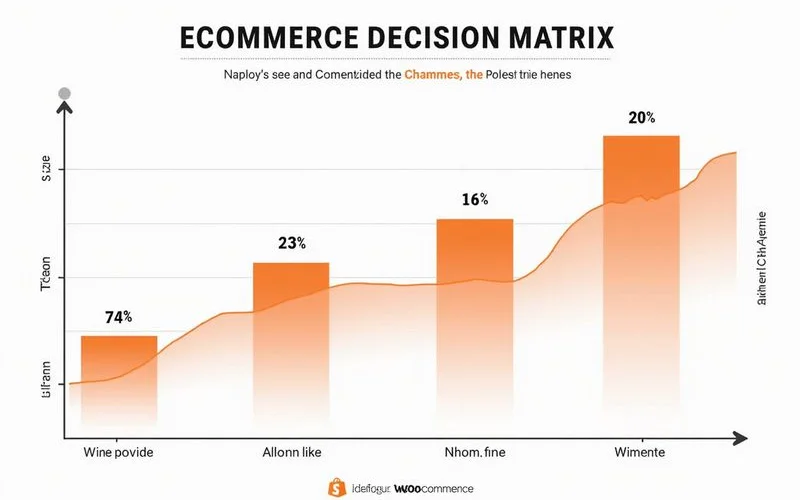
Our framework for choosing a platform relies entirely on your internal resources and long-term catalog size. The best choice matches your technical capability with your required level of customization.
Most Malaysian SMEs land in the hosted software territory for its simplicity, while enterprise stores prefer self-hosted flexibility. We use this specific comparison criteria to help clients visualize the trade-offs.
Review the data below to identify which system aligns with your current operational capacity. Making the right choice now prevents expensive technical debt later.
| Business Requirement | Shopify | WooCommerce |
|---|---|---|
| Catalog Size & Complexity | 50 to 5,000 standard products. | Exceeds 5,000 products or complex variants. |
| Technical Resources | No in-house technical team needed. | Requires developer on staff or retainer. |
| SEO Focus | Supportive content marketing. | Content-first, aggressive blogging strategy. |
| Hosting & Maintenance | Fully managed, zero maintenance. | Self-managed, requires server upkeep. |
| B2B & Wholesale | Basic functionality via paid apps. | Native custom pricing and quote workflows. |
Our team advises reviewing these factors before signing any long-term software contracts. The wrong platform can severely bottleneck your daily operations.
This matrix simplifies a very complex technical decision.
When migration makes sense
Our migration projects represent a significant investment of time, money, and structural risk. Moving between platforms requires careful planning to avoid devastating traffic drops.
You should only undertake this process when specific limitations actively prevent your business from growing. We advise proceeding if maintenance costs are literally eating into your monthly revenue.
A store on undermanaged hosting often spends more on technical fixes than a premium managed subscription would cost. Genuine search visibility problems, like broken canonical structures, often force a necessary switch.
Valid reasons to switch
Our diagnostic audits look for specific platform-level issues that cannot be resolved through normal development. A slow Largest Contentful Paint score that persists despite optimization efforts is a valid trigger.
Missing structured data capabilities that the system itself prevents you from fixing necessitates a change. We fully support a move when you have exhausted all available workarounds for a critical feature constraint.
The current platform must be the verified bottleneck causing the stagnation. Sometimes, outgrowing your current infrastructure is simply a sign of successful expansion.
When to stay put
Our consultants frequently talk merchants out of moving when the root cause is poor strategy rather than bad software. It is not worth doing if you think a new dashboard will magically fix unrelated visibility problems.
Getting bored of the current interface is a terrible reason to risk your organic traffic. We warn against migrating just because a major competitor uses a different system and seems to rank well.
Avoid any consultant who recommends a complete rebuild without naming the specific technical failure. Often, investing that migration budget into better content yields a much higher return.
Our E-commerce SEO service covers optimization strategies for both of these major platforms. Migration projects between them are a regular engagement type for the agency.
For deeper guidance on the technical process itself, see our migration guide.
The honest summary on Shopify vs WooCommerce SEO
Our final verdict is that both platforms can rank at the top of the results, and both can fail completely. The platform you choose matters far less than how you configure the settings and structure your product data.
Building topical authority over time requires high quality writing, regardless of the database storing it. We suggest that if you are starting fresh and feel uncertain, the hosted route reaches a working baseline much faster.
A self-hosted setup gives total control if you have specific technical requirements that a closed system cannot meet. Either way, the daily optimization work that moves shopify vs woocommerce seo rankings remains exactly the same.
Take the time to map out your long-term needs, commit to a path, and focus your energy on serving your customers.